Staff Augmentation Services team planning

How To Choose Staff Augmentation Services For Hybrid IT Teams In 2026

In this article, we explore the shift from traditional outsourcing to capability-driven partnerships in modern software development. We explain how to evaluate geographic models and successfully integrate specialized external talent into hybrid teams.

Content authorNikita SivtsovPublished onReading time9 min read

Introduction

Companies develop complex digital products through software development teams. Historically, companies expanded their technical capabilities and hired offshore developers to reduce payroll expenses. Today, these companies realize that cheap, temporary labor creates friction and delays product launches. As artificial intelligence changes development workflows, companies no longer focus solely on the lowest hourly rate for talent in 2026. Instead, companies seek specialized external professionals who can smoothly integrate with internal engineering teams. These businesses require structured staff augmentation services that supply pre-vetted, highly skilled professionals rather than generic coders. Companies dictate whether an augmented team accelerates delivery or introduces technical debt through vendor selection and proper onboarding frameworks. When organizations prioritize vertical expertise and cultural alignment, they turn external hires into strategic partners. This article explains how to evaluate external talent models, choose the right geographic setup, and successfully integrate augmented developers into existing infrastructures.

2026 Paradigm Shift in IT Team Structures

The technology industry has moved past the era of cheap labor arbitrage. Historically, companies prioritized low hourly rates when they outsourced software development. Today, this cost-driven model fails because AI tools changed how developers write code. The OutsourceAsia Q1 2026 Failure Report shows that the outsourcing industry shifted from efficiency to resilience, and this marks the end of labor arbitrage as the primary strategy. Companies now require capability-driven partnerships to build complex digital products. If engineering departments want to integrate external developers into their internal teams successfully, they must prioritize specialized expertise over basic coding skills.

Modern environments demand structured vendor relationships that provide certainty during development cycles. Vendors supply AI-augmented hybrid talent that understands specific industry requirements. These specialized professionals bring advanced problem-solving capabilities to the engineering infrastructure. When companies use proper staff augmentation services, they build a foundation of trust with external developers. These developers act as strategic partners rather than temporary labor. Just as automated systems improve workflows, specialized external talent accelerates digital product delivery. Organizations must abandon the outdated body-shopping approach and evaluate vendors based on their ability to supply developers who understand modern development workflows and security protocols.

Why Vertical Specialization Outweighs Generalist Approaches

Developers who understand modern workflows must also bring deep industry-specific expertise because it yields higher returns than low hourly rates. Generalist developers struggle with complex modern projects because they lack domain knowledge. They often write code that meets basic requirements but fails to scale within specific industry frameworks. As a result, engineering teams spend valuable time rewriting this code. Organizations require precision when they build digital infrastructure. Staff augmentation in USA usually focuses on specialized professionals who bring exact industry knowledge to the team.

The global market struggles to provide these specialized capabilities. For instance, NASSCOM reports a 21.1% skill gap in emerging technologies such as AI and cloud computing across India. This gap demonstrates why companies must evaluate vendors based on their vertical specialization. Specialized developers offer reliability because they understand the regulatory requirements and security protocols of specific industries. They apply advanced content generation methodologies and technical practices like DevSecOps directly to the project. Either companies invest in vendors with deep vertical expertise, or they risk project failure due to capability shortages. Engineering leaders must select partners who supply professionals with demonstrated experience in the exact technologies the project requires.

Staff augmentation in USA vs Global Talent

Engineering leaders evaluate both domestic and global talent pools to find professionals with these exact technological capabilities. Companies evaluate domestic staff augmentation to find professionals who understand local market dynamics and regulatory frameworks. This domestic approach provides clarity during complex development cycles. However, the global market offers a broader range of specialized experts. Engineering teams use these external professionals to bridge critical capability gaps in their infrastructure. A recent Branex analysis shows that 72% of companies believe staff augmentation improves how they access specialized skills and expertise. These companies prioritize specific capabilities over geographic location. When organizations integrate these specialized experts, they accelerate product delivery and build resilient technical operations.

Vendor Evaluation Process

Companies must rigorously vet these specialized experts before they onboard them into modern software development workflows. Companies must evaluate a vendor's cultural alignment and baseline technical practices to ensure proper integration. A successful Staff augmentation example demonstrates how external developers adapt to internal communication styles and engineering standards. Codewave research shows that AI integration remains central to staff augmentation because it helps companies assess technical expertise, cultural fit, and the likelihood of long-term success. Engineering leaders must approach the vetting process with conviction. They must require vendors to demonstrate how their developers handle code reviews, security testing, and daily stand-up meetings. This rigorous evaluation prevents toxic team dynamics and ensures that external talent operates as a unified part of the internal engineering department.

Navigate Nearshore vs. Offshore staff augmentation services

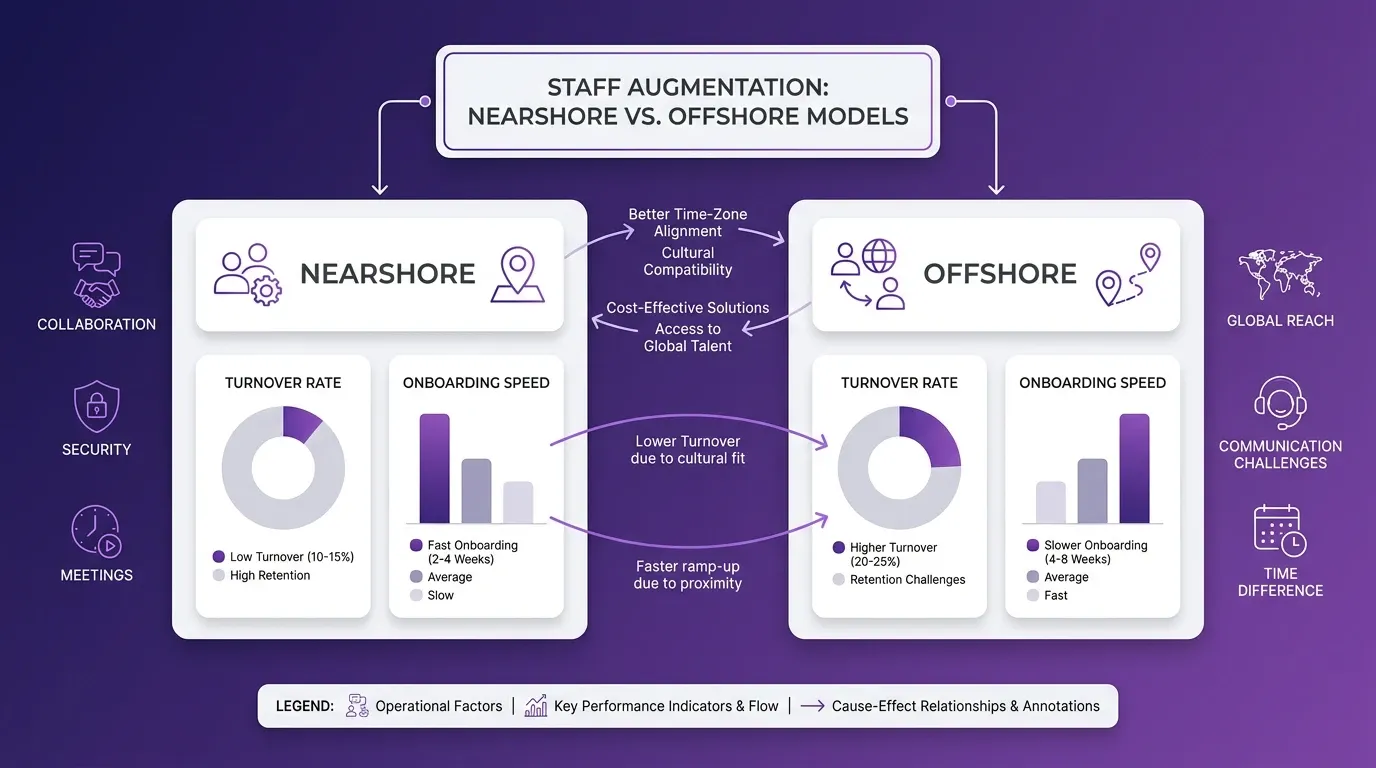
Along with rigorous vendor evaluation, geographic location heavily influences how successfully companies integrate external talent. Companies must establish a practical framework to evaluate different talent models before they select a vendor. The decision between nearshore and offshore operations dictates how effectively the external developers will collaborate with the internal team. Time-zone alignment often justifies the premium cost of nearshore developers for agile projects. When external professionals work in similar time zones, they participate in synchronous meetings and resolve technical issues quickly.

Offshore models often struggle with operational friction. Bonzzu reports that offshore staff augmentation experiences 40-60% annual turnover, and onboarding takes two to four weeks. This high turnover destroys project momentum and forces internal teams to continuously train new developers. Another Staff augmentation example shows that nearshore developers integrate faster and maintain longer project tenures.

Technology leaders must evaluate several operational factors to gain assurance in their geographic choice:

  • Secure repository access

  • Overlapping work hours

  • Specific performance metrics

  • Common security protocols

Nearshore proximity creates a sense of empowerment among distributed teams. These developers apply innovative content generation platforms and specialized tools during the same business hours as their internal counterparts. Organizations that prioritize operational proximity build stronger and more collaborative engineering teams than those that optimize purely for the lowest hourly rate.

Nearshore and offshore models in staff augmentation dashboard

30-Day Zero-Friction Integration Playbook

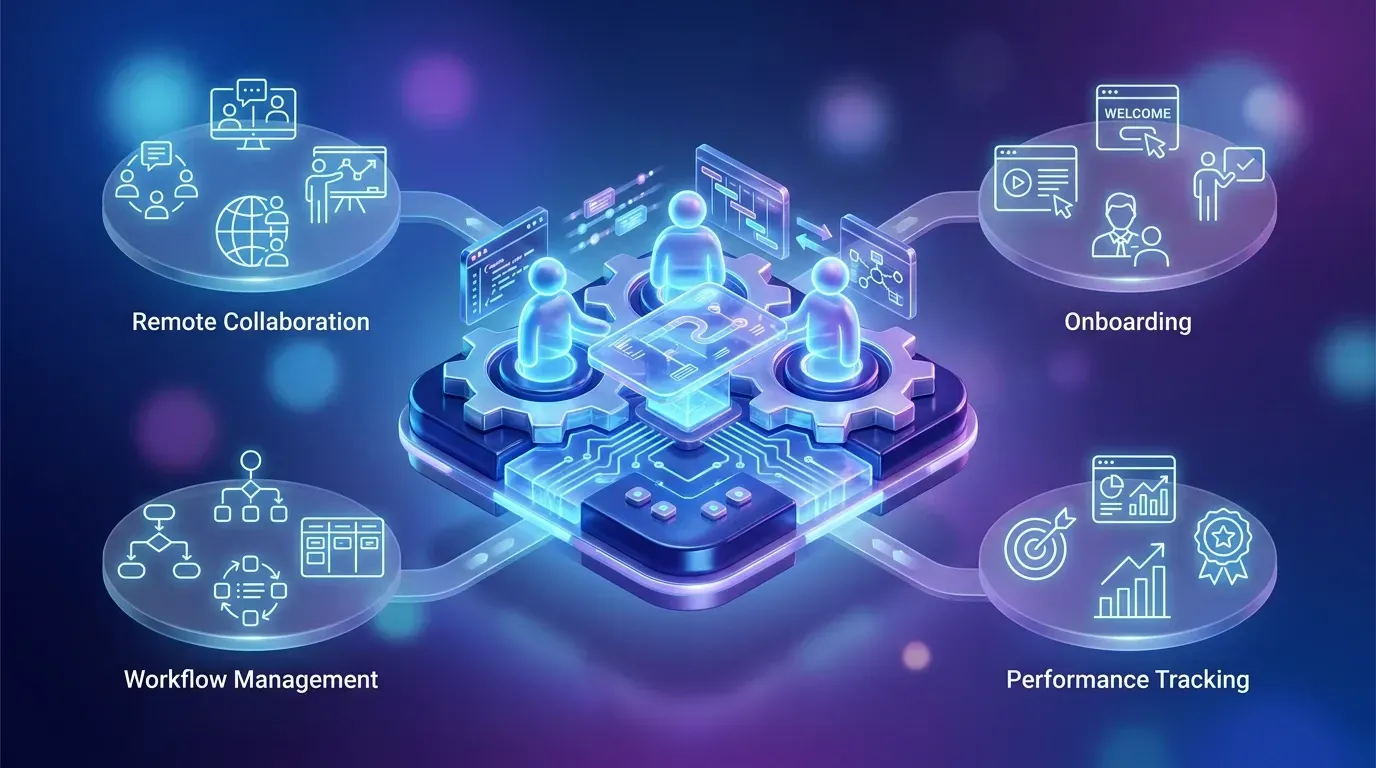
After companies select external developers based on operational proximity, they must implement proper onboarding because poor integration reduces the value of these professionals. According to CareerTrainer.ai, 40-60% of new staff fail to achieve performance goals because companies fail to train and integrate them properly. Engineering leaders must establish a structured first-month roadmap to build strength within the hybrid team. A solid onboarding framework provides the stability necessary for external developers to understand the project architecture and business objectives. When organizations use staff augmentation services, they must execute an integration playbook that eliminates two-tier team dynamics.

A successful Staff augmentation example demonstrates how team leaders guide new team members through specific integration milestones, and they do not abandon them in the codebase. Team leaders teach external professionals how to use internal systems, such as specific repositories or AI-powered content creation platforms, from day one. These leaders structure the onboarding process into clear phases:

  1. Team leaders configure system access and assign a dedicated internal mentor during the first three days.

  2. External developers review code formatting guidelines and security protocols by the end of week one.

  3. Team leaders assign small backlog tickets to build confidence during week two.

  4. The team integrates the developer into daily stand-up meetings and peer code reviews during week three.

  5. Team leaders evaluate cultural immersion and technical contributions at the end of week four.

This careful progression ensures that external professionals adapt to the engineering culture without stress. The framework turns outsiders into productive team members who contribute to the project architecture. Companies experience project delays and misaligned deliverables when they skip these integration steps.

Success Beyond Billable Hours

Once companies complete these integration steps, they fail to capture the true value of external developers if they track only billable hours. According to IPS Technology Services, staff augmentation models will shift toward outcome-based contracts in 2025 and 2026. This shift requires engineering leaders to gain deeper insight into how external talent contributes to the digital product. Companies must evaluate code quality, problem-solving skills, and knowledge transfer effectiveness rather than timesheets.

When organizations pursue Staff augmentation in USA, technology leaders look for partners who deliver real business results. A good Staff augmentation example occurs when an external developer introduces a testing framework that reduces software bugs across the entire engineering department. This specific contribution proves that the external professional operates as a strategic partner. Modern staff augmentation services align their success metrics directly with the client's project goals.

Team leaders measure success when they review pull requests and observe how well external developers document their code for internal teams. The ability to explain complex technical decisions during code reviews shows strong cultural alignment. These qualitative measurements show whether the augmented staff actually speeds up product delivery or simply completes basic tasks. Companies build resilient operations only when they hold external teams to the same high performance standards as their internal employees.

Conclusion

Companies need structural integration and proactive vendor management to enforce these high performance standards and get the most value from external talent. When companies treat external developers as strategic partners rather than disposable resources, they build resilient technical capabilities. Companies perform better when they align their staff augmentation services with a clearly scoped development budget and measurable delivery goals. In the future, businesses will increasingly rely on specialized external experts to handle complex technological shifts and stay relevant in the market. Implement the 30-day onboarding playbook today to align new developers with company culture and achieve long-term business outcomes.
You calculate the return on investment when you measure how quickly the external team delivers new features. You then compare this speed to your internal baseline. Track how many software bugs the team eliminates and count how many hours your internal staff saves on code reviews. These metrics show whether your investment produces profitable outcomes.

Your internal team should use the same communication platforms they already rely on daily. Add external developers to your Slack or Microsoft Teams channels and grant them access to your Jira or Asana boards. This unified approach prevents isolated conversations and keeps everyone accountable for the project tasks.

You protect your code when you require all external developers to sign non-disclosure agreements before they access your repositories. When you buy staff augmentation services, you must restrict codebase access through role-based permissions. These security steps prevent unauthorized downloads and keep your proprietary data safe.

You can hire a software development company like Pollume to build your minimum viable product. Pollume helps businesses turn ideas into scalable digital products through frontend and backend development. They use iterative delivery to refine concepts and create reliable applications that solve your specific business problems.

You must include clauses that transfer all intellectual property rights to your company the moment the developer writes the code. Specify exact payment schedules and define penalty conditions if the vendor misses a delivery deadline. Clear contracts prevent disputes and force the vendor to meet your expectations.

Book a call

Book a time that works best for you

You Might Also Like

Discover more insights and articles

Node.js development cost discussion

Node.js Development Services Cost 2026 | Complete Price Guide

In this article, we examine the true expenses of Node.js applications, break down initial development costs, and uncover hidden maintenance obligations. This guide provides information to help organizations budget accurately and avoid unexpected financial pitfalls throughout the software lifecycle.

AI cost dashboard for MVP

7 Critical Steps to Control Artificial Intelligence Cost During MVP Development

In this article, we examine the financial realities of integrating machine learning features into minimum viable products. We explain how to identify hidden infrastructure expenses and implement structural safeguards that prevent massive budget overruns during early development.

AI development workflow diagram

Guide to AI in Application Development: Complete 2026 Workflow

In this article, we demonstrate how software teams restructure development lifecycles to integrate artificial intelligence. We explain how to transition from experimental pilot phases to production-grade workflows.

UX design process in an MVP

How to Build an MVP: Extensive Architecture Guide for 2026

In this article, we explain the paradox of rapid software development in today's landscape and discuss why foundational architecture matters early on. We explore practical strategies to strip non-essential features and preserve structural integrity.