Introduction
Software architecture reviews evaluate technical choices that influence the long-term success of digital products. Evaluation meetings often turn into rigid audits rather than collaborative problem-solving sessions. Teams struggle with conflicting priorities and unclear outcomes, and this delays implementation. Without proper guidance, seemingly minor oversights compound into catastrophic system failures. For instance, architecture decisions compromised system redundancy and caused Boeing 737 MAX failures. A software architecture review serves as a critical collaboration tool rather than a strict auditing process. Facilitators replace development gridlock with momentum when they manage stakeholder conflicts and establish definitive technical outcomes. A well-managed process ensures teams reach a consensus on trade-offs and mitigate risks before developers write code.
Bottleneck Problem in Traditional Software Architecture Reviews
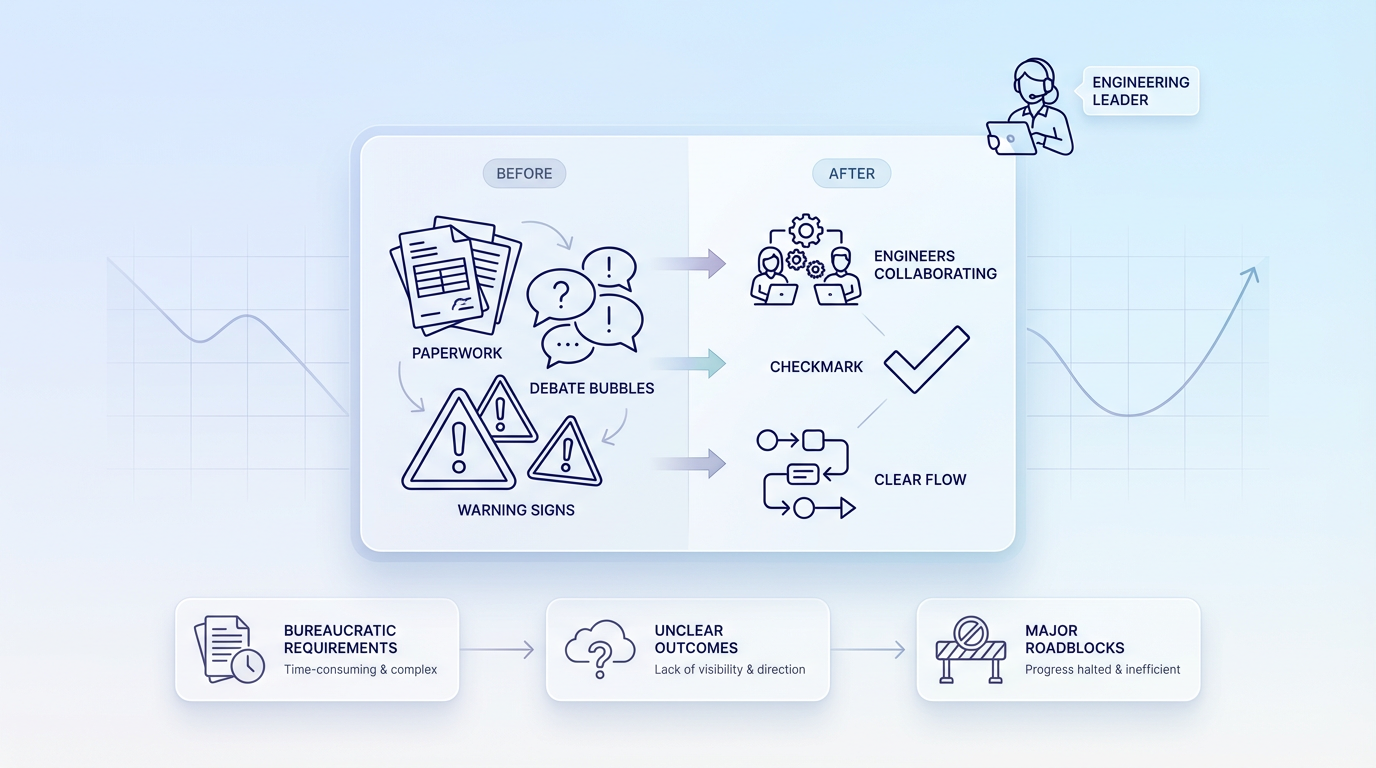
Traditional technical reviews lack a well-managed process and often fail because they function as bureaucratic audits rather than collaborative problem-solving sessions. These meetings devolve into endless debates about minor technical preferences and ignore core system risks. This lack of clear technical decision-making slows engineers, frustrates them, and creates delivery uncertainty that compounds into long-term technical debt if teams fail to address it early. Development teams need certainty before they start building infrastructure, but rubber-stamping exercises stall development. The entire review process breaks down when leaders demand precision without offering a clear path. These inefficient sessions consistently cause three major issues:
-
Bureaucratic requirements replace meaningful technical discussions.
-
Unclear outcomes force developers to guess accepted paths.
-
Minor disagreements escalate into major development roadblocks.
Engineering leaders often rethink how they manage technical evaluations to resolve these bottlenecks.

Preparation and Elicitation of Non-Functional Requirements
Facilitators help resolve these bottlenecks and keep the evaluation focused on critical trade-offs when they gather non-functional requirements and business context before the meeting. These professionals build trust through thorough preparation. They collect performance expectations, security constraints, and compliance mandates from stakeholders. This early preparation prevents teams from wasting meeting time on basic fact-finding. Organizations increase software project success rates by 16 percentage points when they implement early warning systems. Teams establish a solid foundation for software architecture discussions when they address constraints early. Facilitators establish authority when they structure these requirements into clear constraints. Engineers understand the business boundaries before they propose specific system design solutions. Technical teams sometimes employ an AI-powered content creation strategy to document these requirements quickly and share them across departments. Reviewers enter the meeting with a shared understanding of the project goals. The team then focuses on resolving specific technical challenges.
Structure of Technical Checklist
Teams resolve these specific technical challenges when they use a structured framework that breaks down the essential categories for evaluation during a session. Facilitators ensure teams cover all critical domains and avoid missing important infrastructure patterns. They use an architecture review checklist to maintain focus and guide the conversation. This checklist addresses performance limits, data management strategies, and operational readiness. Effective architecture defines how systems scale, communicate, and remain resilient under business growth. Reviewers evaluate these areas to prevent future system failures. The checklist helps verify the soundness of the technical proposal. It forces the team to examine how different components interact under stress. Engineering leaders use structured checklists to prioritize technical evaluations, similar to how marketers use a structured SEO approach for charities to prioritize visibility efforts. The checklist serves as a practical tool rather than an academic exercise. Reviewers examine each infrastructure layer systematically when they divide this checklist into specific subcategories.
System Design Scalability for Peak Loads
The first subcategory involves scalability evaluation, and this process ensures the product handles increased user demand. Engineers design the infrastructure to remain responsive under pressure. They evaluate database connection pools, caching strategies, and load balancing configurations. A single one-second page load delay reduces conversions by 20%. This metric highlights why teams prioritize performance during evaluations. Reviewers analyze how the system design accommodates traffic spikes and maintains the user experience. Teams discuss whether horizontal scaling or vertical scaling better suits the anticipated growth patterns. They calculate resource requirements with precision to avoid provisioning errors. The team shifts their attention to protecting the infrastructure after they confirm scalability.
Infrastructure and Cloud Hosting Security
Teams protect infrastructure by conducting cloud hosting reviews that help identify vulnerabilities and safeguard sensitive data. Security measures require constant scrutiny throughout the evaluation process. Developers outline their approaches to identity management, data encryption, and network isolation. Operational failures caused by poor quality software cost an estimated $1.56 trillion annually. An architecture review checklist includes specific items to verify that the proposed hosting environment meets compliance standards. Engineers prioritize safety by designing proper access controls and disaster recovery procedures. They also verify that the infrastructure can withstand external attacks. This naturally leads teams to examine how different services connect and interact. An architecture review checklist ensures that the proposed hosting environment meets compliance standards while maintaining secure and reliable system design.
Evaluation of Integration Patterns
Teams examine how different services connect when they conduct component communication assessments that help align integration patterns with overall project goals. Modern applications rely on numerous external services and internal microservices. Teams review application programming interfaces, message queues, and event-driven architectures to ensure steady data flow. They check for tight coupling that might cause cascading failures across the system. A technical checklist guides the team to establish certainty about how services recover from network timeouts. Engineers define retry mechanisms and circuit breakers to handle integration failures gracefully. They confirm that data synchronization happens reliably between disparate data stores. A thorough technical evaluation prepares the facilitator to guide the actual meeting effectively.
Facilitator Playbook for Meeting Management
Facilitators guide the actual meeting effectively when they use a step-by-step framework to manage the room and drive technical discussions toward consensus. Facilitators balance the conversation and prevent dominant voices from hijacking the meeting. They ask probing questions that force engineers to defend their technical choices with logic rather than emotion. Amazon Web Services recommends limiting meetings to 30 to 45 minutes. Shorter meetings force participants to focus on critical issues. A facilitator projects authority when they navigate technical disagreements. They apply conviction to steer the group away from theoretical debates and back to the business constraints. A facilitator structures the meeting to achieve specific technical decisions, similar to how a digital marketing agency for non-governmental organizations structures campaigns to achieve specific outcomes. The facilitator intervenes quickly when discussions drift into minor implementation details. They remind the room that the goal involves mitigating risks. A structured software architecture facilitation approach involves concrete actions:
-
Present constraints to set boundaries.
-
Identify specific trade-offs under debate.
-
List available options and their associated risks.
-
Guide teams to select the most pragmatic solution.
Verbal agreement allows the team to formalize their choices through proper documentation.
Decisions and Documentation Through Architectural Records
Proper documentation formalizes these choices because it outlines the accepted trade-offs and assigns accountability. Memory fades quickly after a complex technical meeting concludes. Teams capture their choices in architectural decision records to preserve the reasoning behind their technical strategy. These records capture decision context to inform future stakeholders and provide handover documentation. A well-written record builds trust among developers who join the project later. It proves the soundness of the chosen path. The document details the status, context, decision, and consequences of the technical choice. These written records prevent teams from revisiting the same debates months later. A software project requires clear records to maintain technical direction, similar to how a strong NGO digital marketing strategy requires clear documentation to maintain consistency. The facilitator ensures someone takes responsibility for drafting the document immediately after the meeting. This person distributes the draft to the reviewers for final approval. The approved record lives alongside the source code in the version control system. Developers reference these documents when they build features or debug production issues. This documentation habit prepares the engineering organization to scale effectively.
Review Process Scalability for Future Growth
Engineering organizations scale effectively when they implement an adaptable evaluation process that prevents future technical debt. Young companies often begin with informal discussions, but mature organizations require a standardized technical checklist to maintain consistency. Engineering leaders delegate facilitation responsibilities to senior developers across different teams as product lines multiply, and organizations that rely on distributed engineering teams apply an additional layer of governance to keep reviews consistent. They establish a formal technical board to review cross-cutting concerns. Netflix successfully adopted a microservices architecture to scale independently. This example illustrates how organizations adapt their structures to support massive growth. Teams apply precision to their review processes to handle increased complexity. They evaluate proposals with certainty to ensure new services integrate well with legacy systems. A mature framework categorizes reviews based on the risk level of the proposed changes. Minor updates might require an asynchronous review, but major infrastructure overhauls demand a formal meeting. This tiered approach prevents minor changes from languishing in bureaucratic queues. It allows engineering leaders to focus their attention on the most critical architectural shifts. Regular audits of the review process help teams identify bottlenecks and refine their checklists. This adaptable approach ensures technical evaluations continue to accelerate development rather than hinder it.
Facilitator Playbook for Meeting Management
Technical evaluations accelerate development when facilitators use a step-by-step framework to manage the room and drive technical discussions toward consensus. These professionals balance the conversation and prevent dominant voices from controlling the meeting. They ask probing questions that require engineers to defend their system design choices with logic. They also monitor the clock because Amazon Web Services recommends limiting meetings to a maximum of 45 minutes. This strict timeframe forces participants to address critical issues quickly. The facilitator projects authority during technical disagreements. This individual steers the group away from theoretical debates and back to the business constraints. The meeting loses value when engineers argue over minor preferences.
Similar to how a digital marketing agency structures campaigns for non-governmental organizations to achieve specific outcomes, a facilitator structures the meeting to achieve specific technical decisions. The facilitator intervenes quickly when discussions drift into minor implementation details. This professional reminds the room that the software architecture review exists to mitigate risks. A structured facilitation approach requires concrete actions:
-
Present the business constraints to set meeting boundaries.
-
Identify the specific technical trade-offs under debate.
-
List the available infrastructure options and their associated risks.
-
Guide the team to select the most pragmatic solution.
The team can formalize their choices through proper documentation after they agree verbally.
Decisions and Documentation Through Architectural Records
Proper documentation formalizes these choices because it outlines the accepted trade-offs and assigns accountability. Memory fades quickly after a complex system design meeting concludes. Teams capture their choices in architectural decision records to preserve the reasoning behind their technical strategy. These files capture valuable decision context to inform future stakeholders and provide handover documentation. New developers build trust in the chosen path through these well-written records. The document details the status, context, decision, and consequences of the technical choice. These written records prevent teams from revisiting the same debates months later.
Teams risk past mistakes and development delays if they fail to document their choices. Similar to how a digital marketing strategy maintains consistency for non-governmental organizations, clear records maintain technical direction for software projects. The facilitator assigns someone to draft the document immediately after the meeting. The assigned drafter distributes the document to the reviewers for approval. The approved record lives alongside the source code in the version control system. Developers reference these documents when they build features or debug production issues. This documentation habit prepares the engineering organization to scale effectively.
Review Process Expansion for Future Growth
Engineering organizations scale effectively when they implement an adaptable evaluation process that prevents future technical debt. Small teams often begin with informal discussions, but mature organizations require a standardized architecture review checklist to maintain consistency. Engineering departments delegate facilitation responsibilities to senior developers across different teams as product lines multiply. These departments establish a formal software architecture board to review cross-cutting concerns. For example, Netflix adopted a microservices architecture to scale services independently instead of relying on full system scaling. This strategy illustrates how organizations adapt their structures to support massive growth.
Teams handle increased complexity through precise review processes. They evaluate proposals carefully to ensure proper integration between new services and legacy systems. A mature framework categorizes reviews based on the risk level of the proposed changes. Minor updates require an asynchronous review, and major infrastructure overhauls demand a formal meeting. This tiered approach prevents minor changes from waiting in long queues. The prioritization allows senior developers to focus their attention on the most critical software architecture shifts. Regular audits of the review process help teams identify bottlenecks and refine their checklists. This adaptable approach ensures that technical evaluations accelerate development rather than hinder it.
Conclusion
An architecture review accelerates development when it aligns on trade-offs and mitigates risks instead of demanding a flawless initial design. A collaborative, facilitation-first approach accelerates development and ensures success. A well-structured software architecture evaluation process manages complexities before they disrupt production timelines. These practices establish a strong foundation that guides engineering teams through future challenges. A strategic digital approach standardizes communication and fosters continuous improvement. Implementing these structured facilitation methods immediately helps technical teams build resilient and adaptable products.